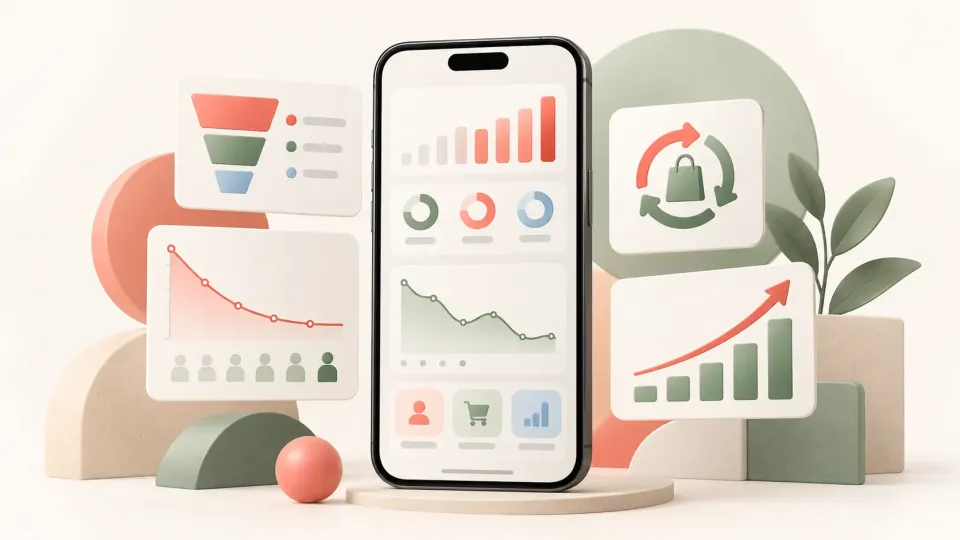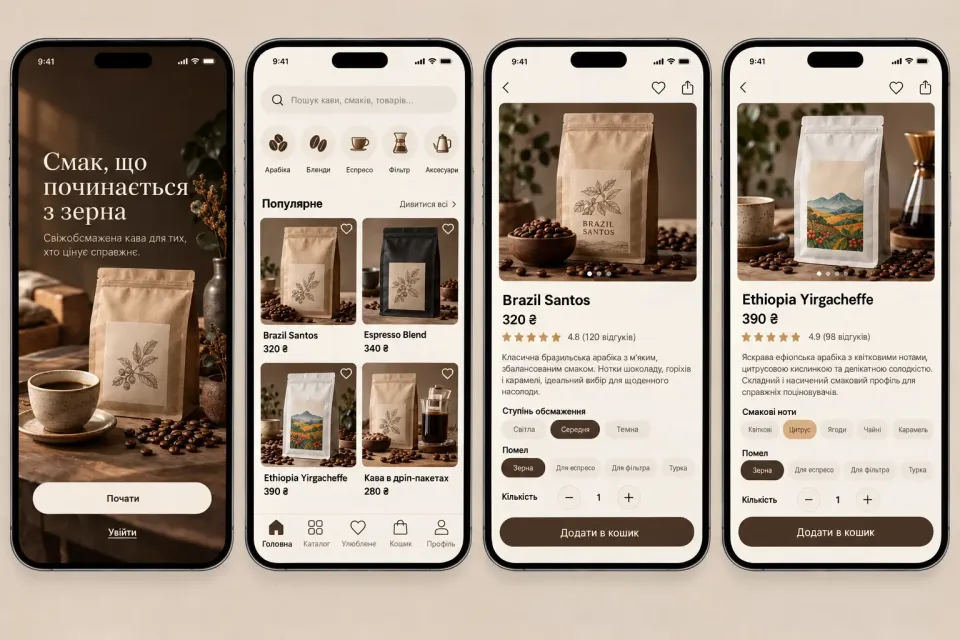

A mobile shopping app is no longer just a digital copy of a catalog. It connects discovery, recommendations, payment, delivery, and post-purchase communication. That is why competition between retail platforms increasingly happens at the level of everyday experience, not price alone.
What the market shows
According to Sensor Tower, retail apps generated 6.6 billion downloads and 41.9 billion hours of use in 2024. The numbers show that mobile has become a permanent touchpoint between brands and shoppers.
What users expect
- Find the right product without complex navigation.
- See current pricing, availability, and delivery terms.
- Save a choice and continue on another device.
- Keep control after payment through status, notifications, and simple returns.
The weakest point in many retail apps is the gap between the promise and the operational experience. A polished catalog cannot compensate for incorrect stock, unexpected fees, or a difficult return. Product metrics should therefore include cancellations, support contacts, repeat purchases, and time to resolve a problem—not only checkout conversion.
A practical approach
Start with three journeys: first purchase, repeat order, and a post-payment problem. Map every step, error, and time to outcome. Then remove everything that does not help the user decide or complete the transaction.
Mobile commerce grows where an app makes a purchase predictable. Global competition only strengthens this requirement: a local service can beat an international player when it understands context better and keeps its promise more reliably.
Source: Sensor Tower: State of Mobile Retail.