
Mosmoxmosmox

Mosmox journal

In focus — React Native.

A selection of publications grouped under the React Native tag.

OTA Updates in Expo: Hotfixes from Your Phone and the Line You Should Not Cross

OTA Updates in Expo: Hotfixes from Your Phone and the Line You Should Not Cross

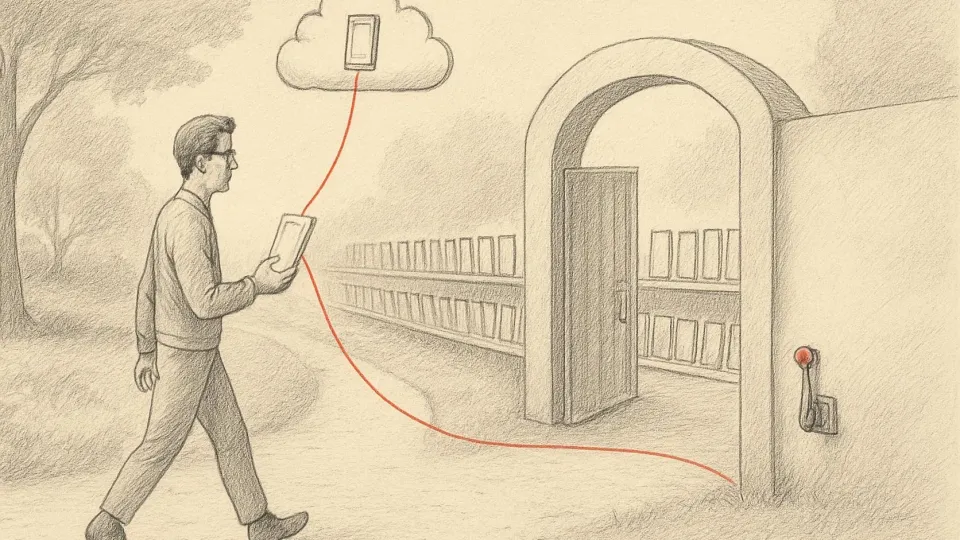
On November 26, 2026 Expo showed how to fix a bug and ship it to production with nothing but a phone. A developer describes the problem in a chat with an AI assistant, checks the fix on a cloud iPhone and sends it to users as an over-the-air (OTA) update, with no new build and no App Review. It sounds ideal for hotfixes. But OTA has hard technical limits, and the app stores have their own rules. Here is how the flow is built and where a quick hotfix ends.

The flow comes from the Expo blog, and the commands come from the EAS Update documentation.

How it worked in Expo's demo

The demo app is OpenMulticam, a camera app: two buttons in the top bar looked clipped when pressed and dragged. The author noticed it on a walk. Then:

  • In the ChatGPT mobile app he asked it to fix the buttons and verify the result in Expo Simulators. The chat app reaches the project through the Expo MCP connector, which exists for ChatGPT, Claude and Grok.
  • A few minutes later a pull request appeared with the style fix, a regression test and recordings of the same gesture on a cloud iPhone, before and after the fix.
  • The author reviewed the PR and merged it himself.
  • A first workflow published the update to a verify channel, and the author checked it again on a cloud iPhone.
  • Only then, on a separate request, a second workflow published the same update to the production channel that the App Store build listens to.

The Expo connector does not push code or open PRs itself. That is done by the chat app's own GitHub integration, such as Codex in ChatGPT, or by a fine-grained GitHub token scoped to that one repository.

Two workflows instead of one button

The key element is two separate manual workflows in .eas/workflows/. Both are of type update and only run on demand (workflow_dispatch):

  • verify-update.yml publishes the update to the verify channel, which a simulator build listens to;
  • publish-production.yml publishes the same update to the production channel.

Both builds in eas.json share one runtime version, so an update verified on verify is guaranteed to be compatible with the production build. Another detail from Expo's setup is the agent rules in AGENTS.md: make the fix on a branch, open a PR, wait for a human to merge, and publish to production only on an explicit request. For a team these rules matter more than the phone: the agent proposes, the human decides.

On pricing: Expo Update is available on every plan, including Free, while Expo Simulators requires a paid plan.

Limit one: what OTA can change at all

An OTA update changes only the JavaScript bundle and assets. Expo says so directly: changes to native dependencies, permissions or native configuration still require a new build and App Store review. According to the EAS Update docs:

  • you can: fix JS bugs, change copy and translations, styling and screen layouts;
  • you cannot: add or upgrade a native module, request a new permission (camera, location and so on), or upgrade the Expo SDK.

Compatibility is guaranteed by runtimeVersion. If an update was built against different native code, the app may crash and expo-updates will roll back to the previous working version. So choose the policy deliberately:

  • "policy": "appVersion" changes the runtime version together with the app version. It is simple, but if you change native code and forget to bump the version, you get a mismatch;
  • "policy": "fingerprint" changes the runtime version whenever anything that may affect the native runtime changes. For teams that update dependencies often, it is the safer option.

Limit two: store rules

App Store. Guideline 2.5.2 requires an app to be self-contained in its bundle and not to download or execute code that introduces or changes its features or functionality. The Review Guidelines have no rule specifically about OTA, and Expo does not promise that every update is fine. The EAS Update docs say you need to follow the platforms' rules, and that changes to your app's behavior usually need to be reviewed. The practical takeaway: OTA is a tool for fixes and small UI changes, not a way to ship a new feature around App Review.

Google Play. The Device and Network Abuse policy forbids an app from updating itself outside Google Play's update mechanism and from downloading executable code (dex, JAR, .so) from other sources. There is an exception for code that runs in a virtual machine or interpreter with indirect access to Android APIs, such as JavaScript. At the same time the policy says that code loaded at run time must not enable violations of other Google Play policies.

For a team this comes down to a simple rule: if a change deserves a line in "What's New", it should go through a new build and review.

How to keep a hotfix from becoming an incident

Publishing to production in minutes is both the benefit and the risk: a mistake also reaches every user in minutes. EAS Update has tools to contain that risk:

  • Gradual rollout. eas update --rollout-percentage=10 serves the update to 10% of users only. You change the percentage with eas update:edit, and eas update:revert-update-rollout cancels the rollout and restores the previous update. Only one active rollout is allowed per branch, platform and runtime version.
  • Rollback. eas update:rollback returns users to a previously published update or to the update embedded in the build. The latter helps when every OTA version is broken.
  • Monitoring. Expo recommends watching the error rate on the dashboard during a rollout and stopping it if errors rise.

The demo in Expo's blog publishes straight to 100% and does not mention rollback. For an app with a real audience we recommend adding a gradual rollout between verify and production.

OTA hotfix checklist

  • The change touches only JS or assets: no new native modules, permissions or SDK upgrades.
  • The change fixes or refines existing behavior rather than adding a new feature.
  • runtimeVersion uses the fingerprint policy or another one the team understands.
  • The fix went through a PR and human review, even if an agent wrote the code.
  • The update was first checked on a separate channel with the same runtime version.
  • In production: 5–10% of users first, then error monitoring, then 100%.
  • The team knows how to roll back: eas update:rollback or a return to the embedded update.
  • The agent may publish to production only on a direct human command.

Conclusion

Expo's demo shows that the whole hotfix cycle, from bug report to production, can be done from a phone in half an hour. The interesting part is not the phone but the structure: a separate verification channel, a shared runtime version, a PR with a test and a screen recording, and a human with the final say. Copy that structure into your own process, add a gradual rollout and a rollback plan, and OTA becomes a reliable way to fix bugs quickly. Just do not use it to ship new features around App Review.

Expo + Supabase for an MVP: A Backend in One Command and the RLS You Cannot Ship Without

Expo + Supabase for an MVP: A Backend in One Command and the RLS You Cannot Ship Without

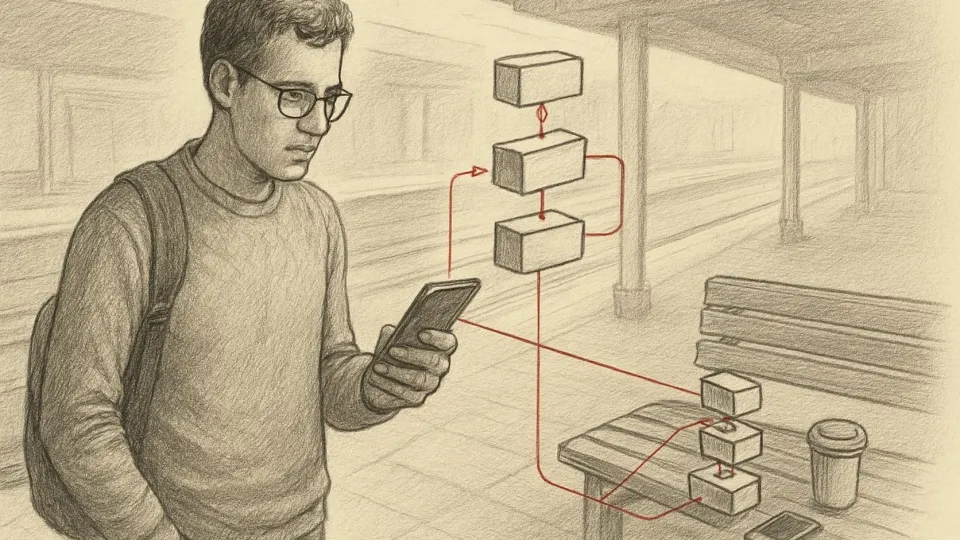
On November 10, 2026 Expo added an EAS CLI command that connects Supabase to an Expo app in one step: it creates the project, installs the SDK and writes keys into every environment. For an MVP this means Postgres, authentication, file storage and realtime in a few minutes. But there is one thing you cannot ship such an app without: Row Level Security. Here is how the integration works and what to do before release.

The facts come from the Expo changelog.

What the command does

You need eas-cli 21.8.0 or newer and a project linked to Expo Services. The eas integrations:supabase:connect command:

  • opens the browser once to authorize Supabase, asks for an organization and region, and creates the project;
  • installs @supabase/supabase-js and expo-sqlite and adds the expo-sqlite config plugin;
  • writes EXPO_PUBLIC_SUPABASE_URL and EXPO_PUBLIC_SUPABASE_PUBLISHABLE_KEY to .env.local and to Expo environment variables for Production, Preview and Development.

Local development, builds and updates all read the same values. If you already have a Supabase project, connect it with --link. Rerunning is safe: the command reuses what it created and asks before replacing anything. In CI, after a one-time browser authorization, it runs without prompts using --non-interactive.

Who owns the project

The project is created in your own Supabase organization: the data and the bill are yours. Expo keeps an encrypted token so the CLI can act on your behalf; you can revoke it in Supabase or with eas integrations:supabase:disconnect. Expo generates a random database password, hands it to you and keeps no copy. If you later need psql or migrations, reset the password in the Supabase dashboard.

The key point: RLS

Both values the command writes are public: they are bundled into the app and anyone can extract them from a build. Expo states plainly that Row Level Security is what protects the data. Without RLS and policies, anyone with the publishable key can query your tables directly, bypassing the app.

What to do before the first release:

  • Enable RLS on every table the app reads or writes.
  • Write separate policies for select, insert, update and delete. The usual approach is access only to rows whose owner matches the current user's ID.
  • Test the policies with requests as another user and while signed out.
  • Never put Supabase secret keys with full access into the app: they belong only on the server or in edge functions.

A separate backend per environment

At first all three environments share one project. That is convenient for an MVP but risky: a test build writes to production data. Running eas integrations:supabase:connect --environment preview creates a separate project for Preview, so a preview build can never change production. We recommend doing this before the app gets its first real users.

Sessions and native modules

The client snippet in the docs stores the session in expo-sqlite, so users stay signed in between launches with no AsyncStorage and no custom adapter. Everything works in Expo Go. You need a development build once you pass options to the expo-sqlite plugin or add other native libraries.

Local development

The app reads .env.local, so switching to a local database is a two-line change. npx supabase init and npx supabase start bring up Postgres, auth and Studio on your machine without a Supabase account. Take the URL and key from supabase status, and create your tables in Studio at 127.0.0.1:54323, since the local database starts empty. Local work does not count against the two active projects on the Supabase Free plan.

MVP checklist for Expo + Supabase

  • eas-cli 21.8.0+, eas integrations:supabase:connect.
  • RLS enabled on all tables, policies tested as different users.
  • A separate Supabase project for Preview.
  • Database schema and policies kept as migrations in the repository, not only in the dashboard.
  • A local stack for development so experiments never touch cloud data.
  • Before release, check your Supabase plan and the Free plan limits.

Conclusion

The Expo and Supabase integration removes the manual backend and environment variable setup: from an empty project to the first database query takes minutes. It is a good start for an MVP. A fast start does not cancel security, though: a public key in the app is fine only when RLS and policies really restrict access. Set them up, together with a separate Preview environment, before real data arrives in the app.

Expo Services: Mobile CI/CD from Your Phone for a Small Team

Expo Services: Mobile CI/CD from Your Phone for a Small Team

On November 18, 2026 Expo released the Expo Services app: Expo Workflows, Observe data and cloud simulators on your phone. For a small team it is a way to keep builds and releases under control without a laptop. Here is what it does and who it helps.

All facts come from the Expo changelog.

What the app is

A mobile client for Expo services so you can monitor and act on changes without opening expo.dev. It is available for iOS (iPhone and iPad) and for Android on Google Play. According to Expo, the iOS version is written entirely in Expo Exact.

What you can do

  • Observe: an overview screen with a TTI (time to interactive) chart, active users and recent activity. Chart points can be scrubbed. Projects without Observe are shown how to add it.
  • Workflows, Builds, Updates, Submissions: each has a list and a detail page. You can filter runs, start a workflow on a chosen branch with inputs, open jobs, logs and artifacts, install a build on your phone, cancel a build or re-run a workflow.
  • Notifications: in Settings you can turn on a push when a workflow run finishes; tapping it opens that run.
  • Expo Simulators: a cloud iOS or Android simulator started from a build that you can use live. You can set location and orientation and watch CPU, memory and network. After the session you keep screenshots, recordings, logs and a performance summary.
  • iPad and iPhone Duo: the app runs natively on iPad with a sidebar, and on iPhone Duo the sidebar follows the hinge.

Limitations

Simulators in the app are iOS-only for now: Android simulator support is "coming very soon," according to Expo. Native widgets, Live Activities and more Observe data are planned. The page does not state pricing, regions or whether the release is beta. Sign-in works with email and password, Google, GitHub, Apple, SSO or passkey.

Why it helps a small team

  • Fast reaction to failures. A push when a workflow finishes tells you about a broken build while you are away from your computer.
  • Releases without a laptop. Re-running a workflow or canceling a build takes a few taps.
  • Checking on a real device. Install a build from your phone and test it right away.
  • Metrics in your pocket. TTI and active users are visible without a separate dashboard.

What to consider

  • The app pays off if you already use Expo Workflows and Observe. Without them most features will not matter.
  • Managing releases from a phone needs access discipline: protect the account, for example with a passkey or SSO, and be clear about who may start workflows and submissions.
  • Do not rely on push alone: add a team chat channel too.

Conclusion

Expo Services does not replace a full CI dashboard, but it covers the common small-team situations: learning about a failure, re-running a build and checking the result on a phone or in a cloud simulator. Try it on one project before moving your release process to it.

Journal

Ideas and products