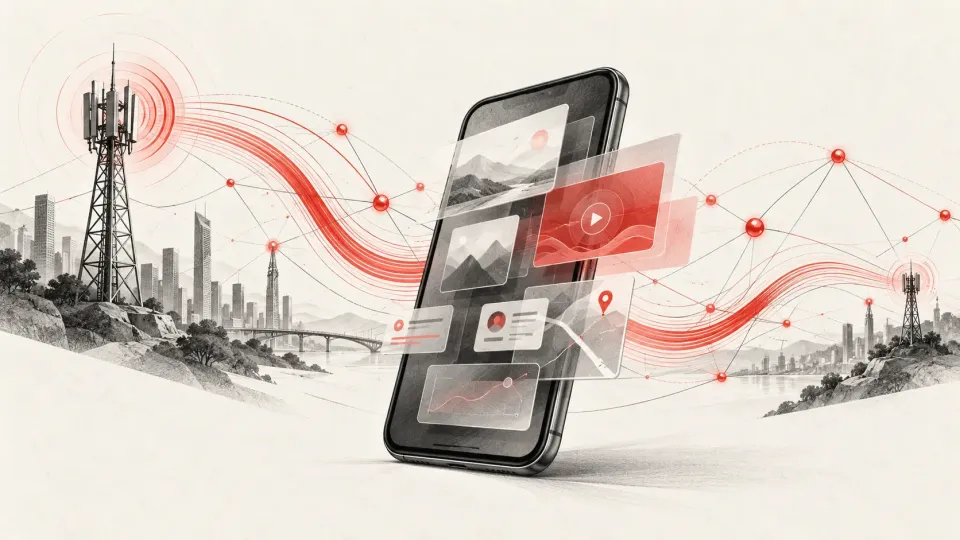
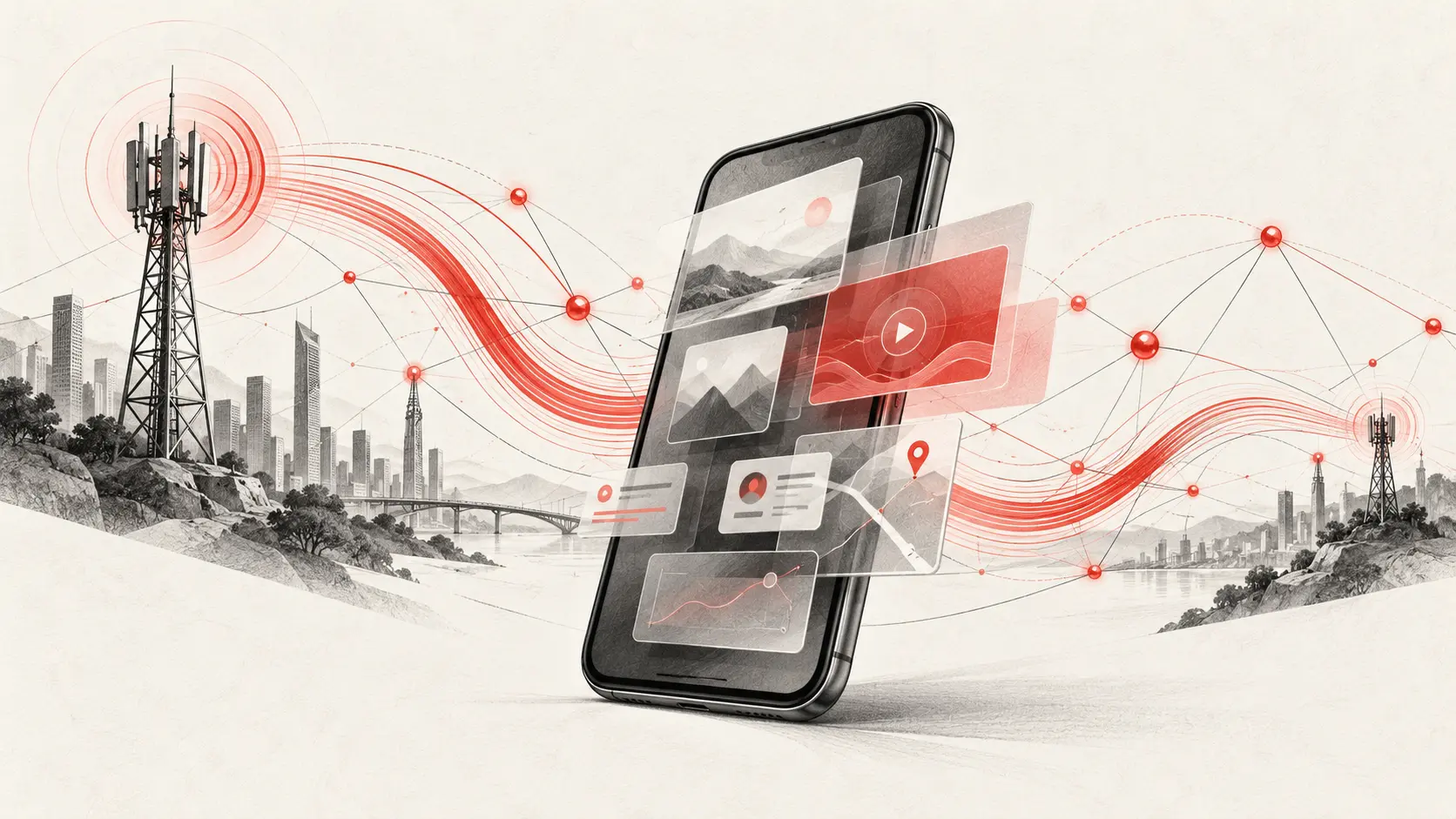
5G is often described as a technology for higher speed. For a mobile product team, the more important change is in user expectations. People move between screens faster, consume more video, and are less willing to forgive delays.
What changes with 5G
In the 2025 Ericsson report, 5G is presented not only as a faster radio connection, but as a foundation for richer digital journeys. Higher capacity can deliver media faster, while lower latency makes interactions feel closer to instant. It does not remove slow devices, congested cells, or network transitions.
Three common team mistakes
- Building only for ideal connectivity. An app that works well only on 5G becomes unpredictable for a large part of its audience.
- Confusing fast loading with good experience. A screen may appear quickly but remain unusable if data and component states arrive chaotically.
- Using extra bandwidth as an excuse for extra weight. Higher capacity is not permission to ship unlimited video, images, or JavaScript.
How to use 5G well
Start with journeys where network characteristics create real value: streaming video, collaboration, navigation, remote diagnostics, or large files. Decide what can adapt: video quality, image resolution, list density, or sync frequency.
Each journey should have at least three states: fast connectivity, slow connectivity, and temporary offline mode. The interface should explain what is happening, avoid blocking unnecessary actions, and let users return to an unfinished process.
5G works best as a multiplier for a well-designed experience. When the product logic is clear, network improvements make it smoother. When the logic is confusing, speed only gets the user to an error faster.
Source: Ericsson Mobility Report, June 2025.