
Mosmoxmosmox
Get in touch

Mosmox / FAQ

Questions that help you get started.

We gathered answers about our approach, process, and collaboration with Mosmox. If you cannot find what you need, just get in touch.

01What does Mosmox do?

We research, design, and develop mobile apps for businesses, teams, and new digital products.

02Which platforms do you work with?

We build products for iOS and Android, and when needed, cross-platform solutions and the web layer that supports the app.

03Can I come to you for design only?

Yes. We can join at the research or UX/UI design stage, or provide full design support for an existing product.

04Do you work with ready-made ideas?

Yes, but we first help validate their value, audience, and shortest path to the first product version.

05What does the first stage of work include?

Getting to know the business, clarifying goals, analyzing users, and creating a clear plan for the next steps.

06How long does app development take?

It depends on the scope of features and integration complexity. A simple MVP can usually be planned for a few months; we provide an exact estimate after the brief.

07What does MVP mean in your approach?

It is the first focused version of a product with the most important scenarios, allowing you to quickly test hypotheses with real users.

08Do you work with an existing MVP?

Yes. We can audit it, identify problem areas, prioritize improvements, and plan the next release.

09How do you set the project price?

We assess the scope of work, team composition, risks, and stage duration. After discussing them, we agree on a clear estimate and collaboration format.

10Can we start with a small task?

Yes. We often start with discovery, a UX audit, or a prototype so both sides can more easily assess future collaboration.

11Who is part of the project team?

The team depends on the challenge, but usually includes a product manager, designer, and developers. We add QA and analytics specialists when needed.

12Will there be one responsible contact for the project?

Yes. A dedicated team member handles communication and keeps agreements, timelines, and next steps in focus.

13How often will we receive updates?

We work in short iterations and show progress regularly. We agree on the sync format around your team’s rhythm and needs.

14Do we need a detailed technical specification before starting?

No. It is enough to describe the business goals, audience, and problem. We will help shape the functional details together.

15Do you sign NDAs?

Yes, when needed, we sign a confidentiality agreement before exchanging sensitive information.

16Which technologies do you use?

We choose technologies for the challenge, platform, and product’s long-term goals rather than imposing one stack on every project.

17Can you help with integrations?

Yes, we work with APIs, payment services, CRMs, analytics, push notifications, and other systems the product needs.

18Do you test the app before launch?

Yes. We check key scenarios, stability, interface adaptability, and prepare the product for store publication.

19Do you publish apps to the App Store and Google Play?

Yes, we help prepare the materials, configure the publication, and meet the stores’ technical requirements.

20What happens after launch?

We can support the product by analyzing user behavior, releasing updates, improving the experience, and developing the functionality.

21Do you support products that are already launched?

Yes. After a short audit, we can join ongoing support, product development, or individual releases.

22Do you work with teams from other countries?

Yes. We work remotely, use shared workspaces, and adapt communication to the team’s time zone.

23What languages do you use for communication?

We communicate in Ukrainian and English. We prepare working materials in the language that is convenient for the team and product users.

24Can you strengthen our in-house team?

Yes, we can join as a separate product team or cover a specific role or direction for an agreed period.

25How should we prepare for the first conversation?

Tell us what problem the product solves, who it is for, what has already been done, and what outcome would be successful for you.

26Do you conduct user research?

Yes. We choose the format for the challenge: interviews, competitor analysis, prototype testing, or behavior research in an existing product.

27Can you help define feature priorities?

Yes. We compare user value, business impact, complexity, and risks so the team can focus on what matters most.

28Do you work on app redesigns?

Yes. We start with an audit of the current experience, identify growth opportunities, and gradually update the interface without losing clear user flows.

29Can you help with product analytics?

Yes. We help define key events and metrics, configure analytics tools, and turn data into product development decisions.

30How do we start working together?

Write to us through the contact form or call us. We will ask a few questions and suggest the best format for the first step.

Journal

Ideas and products

All posts
How to Tell If Your Mobile App Pays Off

How to Tell If Your Mobile App Pays Off

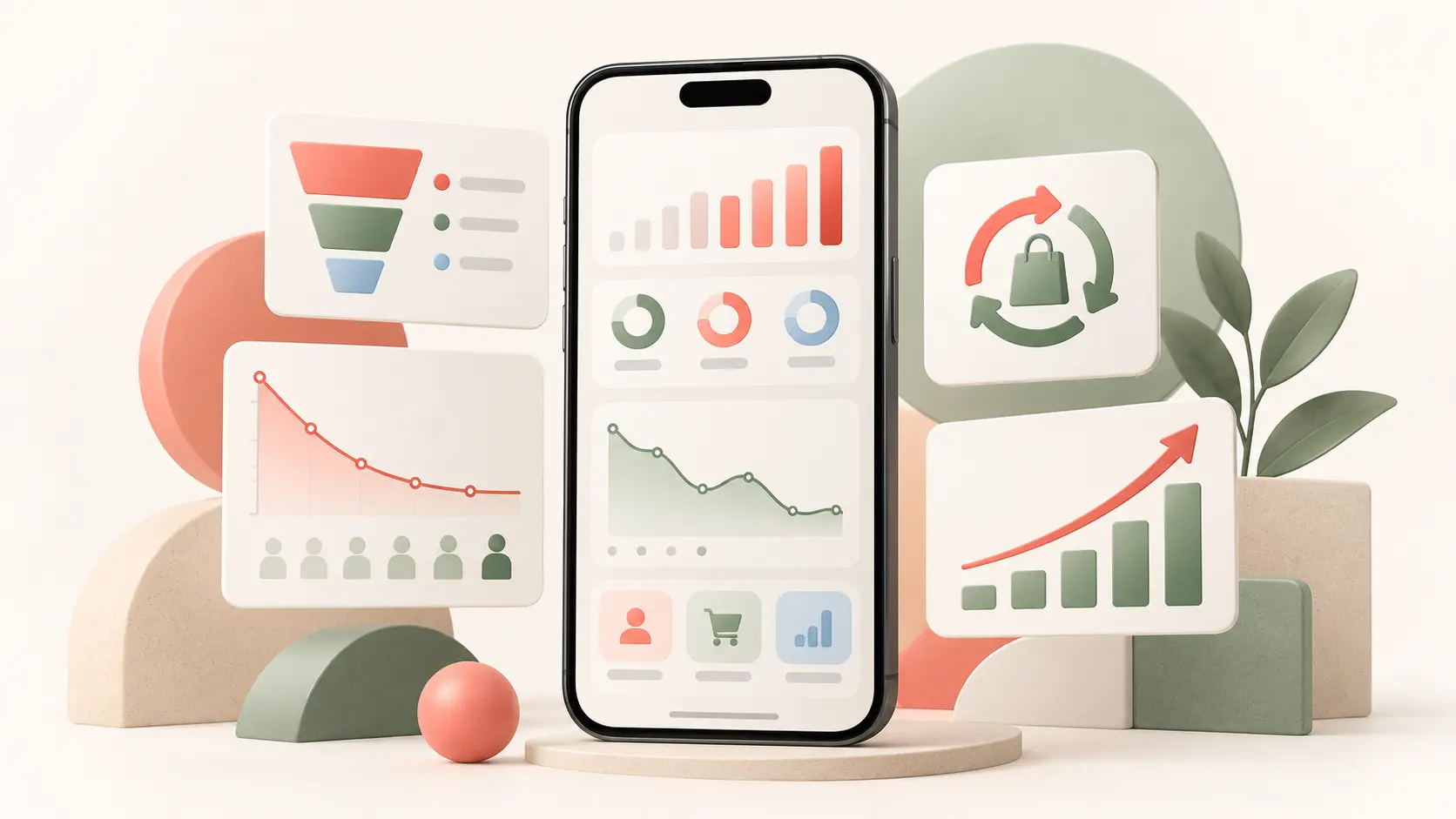
A mobile app can have many installs and still fail to deliver the return a business expects. To understand whether a product pays off, look beyond a single impressive number and follow the whole user journey: from the first open to repeat purchase and long-term use.

What “paying off” really means

Payback does not always mean instant revenue after launch. For some products, it means direct income from purchases or subscriptions. For others, it means more repeat orders, lower service costs, more frequent visits, or higher customer value. Start by defining the business outcome and the period you will use to evaluate it.

Installs: an early signal, not the result

Install volume shows how well reach, advertising, and the app store page are working. An install alone does not create value. Also track acquisition source, first launch rate, registration, and cost per install. If people install the app but never reach a useful first action, the issue may be positioning or onboarding.

Registration and activation

Registration is one step closer to value, but activation should be the key milestone: the moment when a person gets a real result. For a service, it may be the first order; for a finance product, a funded account; for a B2B tool, the first task created. Compare install-to-registration and registration-to-activation conversion.

Retention: do users come back

Retention shows what share of people return after a day, a week, or a month. Cohorts help separate a temporary spike from a lasting habit. Look beyond the average and compare channels, segments, and product versions. If retention drops after the first week, review the value of the repeat scenario, reminders, and overall experience.

Repeat purchases and revenue

For a commercial app, track repeat purchase rate, average order value, paid conversion, and revenue per active user. Separate new customers from returning customers. A repeat purchase often reveals real product value more clearly than a one-time transaction.

Acquisition cost and customer value

CAC is the cost of acquiring one customer. LTV is the expected value of that customer over the full relationship. A practical rule is that LTV should exceed CAC by enough to cover operations, risk, and product development. Calculate these metrics by channel and cohort so an expensive acquisition source cannot hide inside an overall average.

How to build a useful measurement system

Start with one primary metric tied to the business outcome and three or four supporting metrics. For example: activation, day-30 retention, repeat purchase, and revenue per user. Define the events, data sources, and review cadence. Metrics should support decisions: what to change in the product, which channel to scale, and where another experiment is needed.

Conclusion

You can see whether a mobile app pays off when marketing spend, user behavior, and revenue are connected in one clear model. Installs show scale, registration and activation show first value, retention shows habit strength, repeat purchases show the quality of the offer, and LTV-to-CAC shows the economics of growth.

Journal

Ideas and products

All posts
How to Tell If Your Mobile App Pays Off

How to Tell If Your Mobile App Pays Off

A mobile app can have many installs and still fail to deliver the return a business expects. To understand whether a product pays off, look beyond a single impressive number and follow the whole user journey: from the first open to repeat purchase and long-term use.

What “paying off” really means

Payback does not always mean instant revenue after launch. For some products, it means direct income from purchases or subscriptions. For others, it means more repeat orders, lower service costs, more frequent visits, or higher customer value. Start by defining the business outcome and the period you will use to evaluate it.

Installs: an early signal, not the result

Install volume shows how well reach, advertising, and the app store page are working. An install alone does not create value. Also track acquisition source, first launch rate, registration, and cost per install. If people install the app but never reach a useful first action, the issue may be positioning or onboarding.

Registration and activation

Registration is one step closer to value, but activation should be the key milestone: the moment when a person gets a real result. For a service, it may be the first order; for a finance product, a funded account; for a B2B tool, the first task created. Compare install-to-registration and registration-to-activation conversion.

Retention: do users come back

Retention shows what share of people return after a day, a week, or a month. Cohorts help separate a temporary spike from a lasting habit. Look beyond the average and compare channels, segments, and product versions. If retention drops after the first week, review the value of the repeat scenario, reminders, and overall experience.

Repeat purchases and revenue

For a commercial app, track repeat purchase rate, average order value, paid conversion, and revenue per active user. Separate new customers from returning customers. A repeat purchase often reveals real product value more clearly than a one-time transaction.

Acquisition cost and customer value

CAC is the cost of acquiring one customer. LTV is the expected value of that customer over the full relationship. A practical rule is that LTV should exceed CAC by enough to cover operations, risk, and product development. Calculate these metrics by channel and cohort so an expensive acquisition source cannot hide inside an overall average.

How to build a useful measurement system

Start with one primary metric tied to the business outcome and three or four supporting metrics. For example: activation, day-30 retention, repeat purchase, and revenue per user. Define the events, data sources, and review cadence. Metrics should support decisions: what to change in the product, which channel to scale, and where another experiment is needed.

Conclusion

You can see whether a mobile app pays off when marketing spend, user behavior, and revenue are connected in one clear model. Installs show scale, registration and activation show first value, retention shows habit strength, repeat purchases show the quality of the offer, and LTV-to-CAC shows the economics of growth.