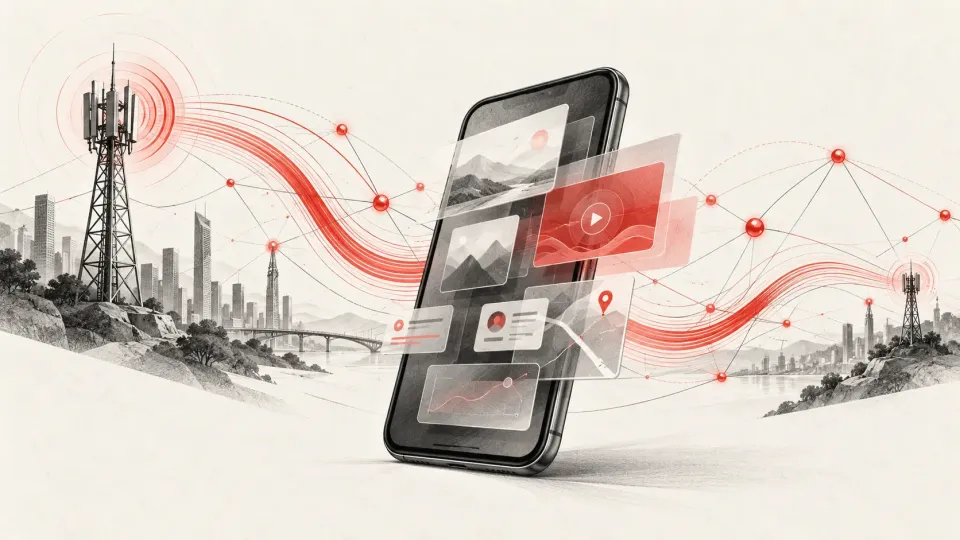
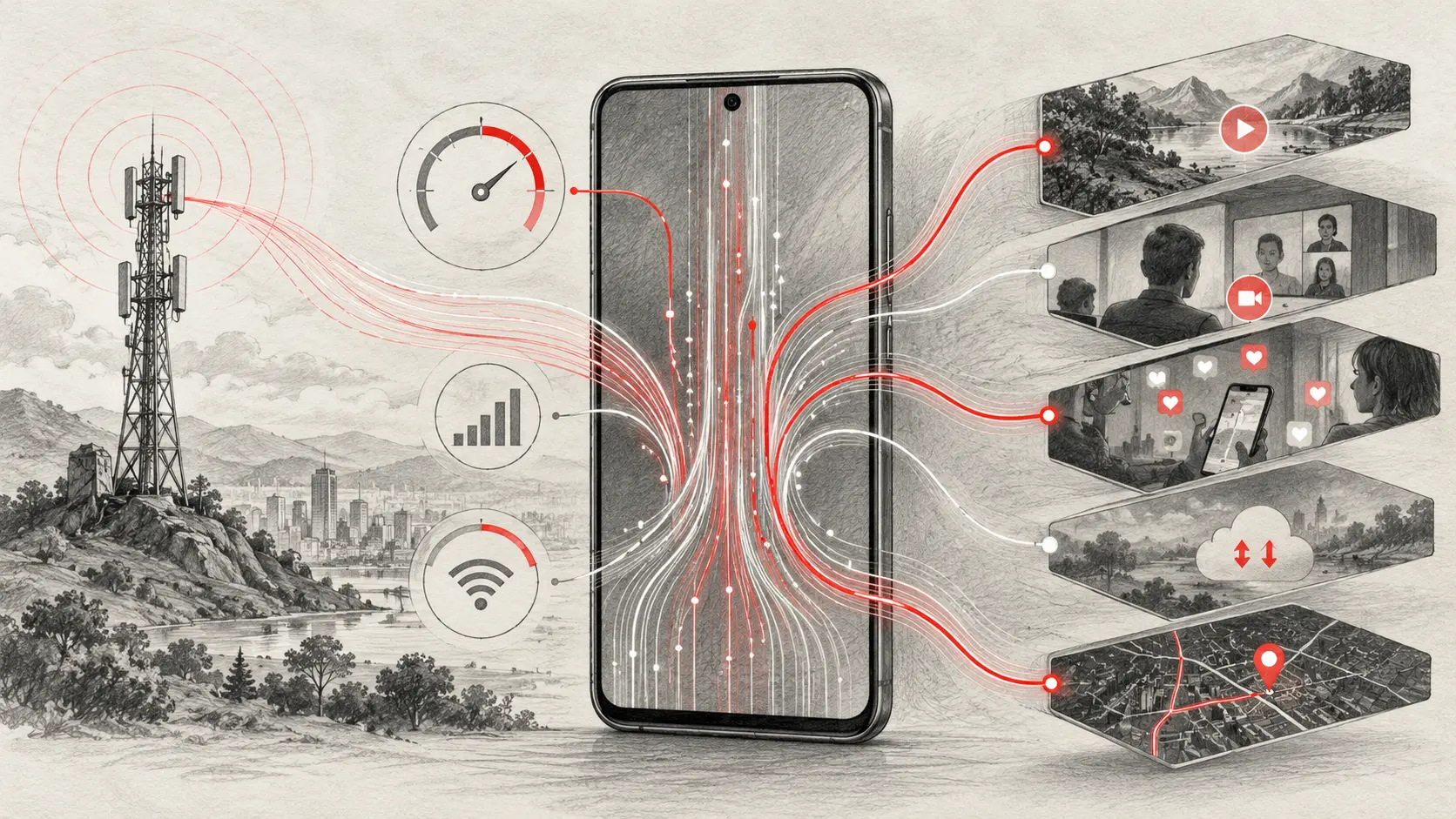
As people spend more time on smartphones and consume more data, a mobile product is no longer a short session between other activities. It becomes an everyday environment for work, shopping, communication, and entertainment.
What 22 GB means
According to Ericsson, an active smartphone generated about 22 GB of mobile traffic per month on average in 2025. It is an average, so it hides differences between markets, plans, devices, and behavior. For a product team, it signals that users expect more than access: they expect a complete, fast, media-rich experience.
Practical consequences
- Users return throughout the day, so session state should survive interruptions.
- Large media files should load progressively with adaptive quality.
- Search, filters, and drafts should survive a short loss of connectivity.
- Data-use messages should be clear, especially for video and backups.
What to test before launch
Map the most common journeys and measure time to the first useful action, payload size, and repeated requests. Test separately on a low-cost device and a slow network. If the product constantly needs large resources, the issue is usually architectural rather than a user problem.
Mobile statistics become useful when they lead to decisions: what to cache, compress, show first, and where to give users control. Twenty-two gigabytes is not a consumption target; it is a reminder of the scale of everyday mobile life.